
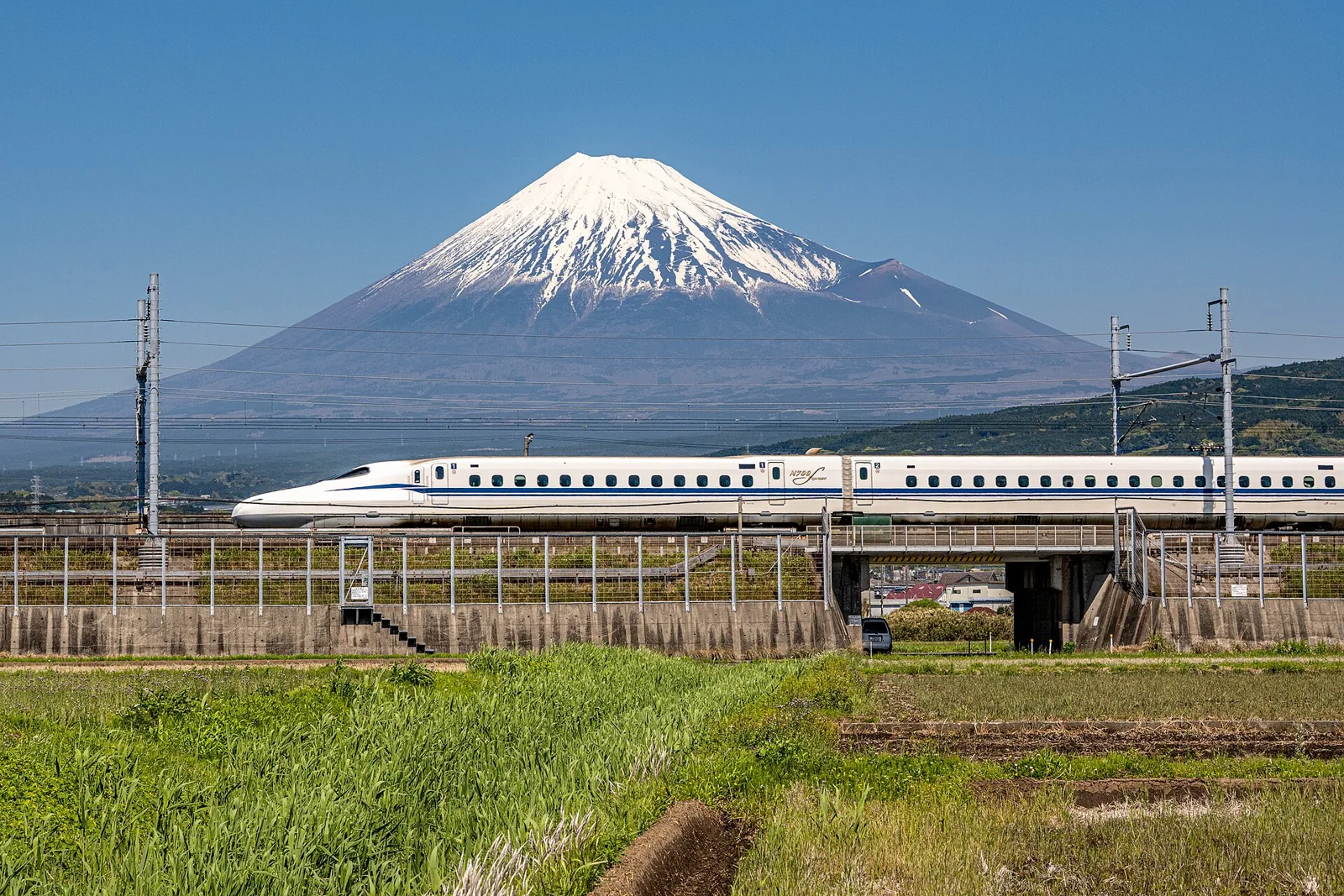
The Japan Rail Pass has always been the classic way for visitors to explore Japan by train, but the pass you can buy today is not the one your friends used a few years ago. Prices jumped in October 2023, faster NOZOMI and MIZUHO bullet trains became available for a small extra fee, and since October 2026 there are now two different prices depending on where you buy. If you are planning a trip around Tokyo, Kyoto, Osaka and beyond, here is everything you need to know about the new JR Pass, and whether it is still worth it for you.
What Is the Japan Rail Pass?
The Japan Rail Pass is a joint ticket from the six companies of the Japan Railways (JR) Group. It gives you unlimited travel on JR trains across the country for 7, 14 or 21 consecutive days, in either Standard (Ordinary) cars or first-class style Green Cars. It covers most Shinkansen bullet trains, limited express, express and local JR trains, plus JR buses on most local routes, the Tokyo Monorail to Haneda Airport and the JR West Miyajima Ferry near Hiroshima (a ¥100 Miyajima Visitor Tax is paid separately).
It does not cover JR highway buses, subways or private railways, and you cannot ride NOZOMI or MIZUHO trains without an extra ticket (more on that below). Full details are on the official scope of validity page.
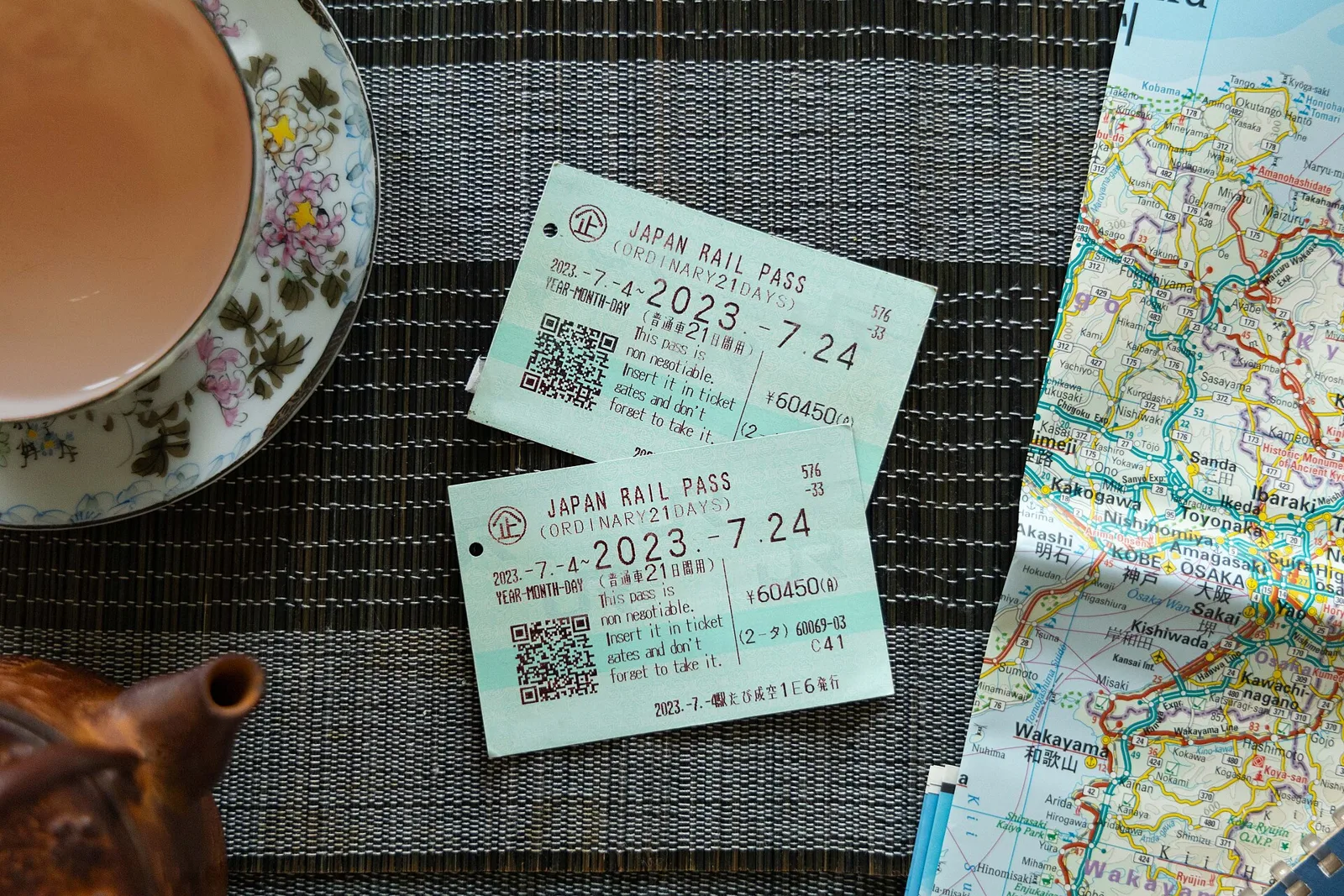
Japan Rail Pass Tickets Ready for a Trip (Photo: Emile Donzel, CC BY-SA 4.0)
What Is New About the JR Pass?
On October 1, 2023, the JR Group raised the price of the pass for the first time in decades (aside from consumption tax changes). The 7-day Ordinary pass went from ¥29,650 (via an overseas agency) to ¥50,000, and the 7-day Green pass from ¥39,600 to ¥70,000. In exchange, pass holders gained the option to ride the fastest NOZOMI and MIZUHO Shinkansen by buying a special add-on ticket, plus discounts at selected tourist facilities and hotels (official announcement).
The newest change came on October 1, 2026. The JR Group announced on April 9, 2026 that passes bought through overseas travel agencies now cost more (for example ¥53,000 for a 7-day Ordinary pass), while passes bought on the official JAPAN RAIL PASS Reservation website stay at the old prices “for a limited time” (official notice). No end date for this online price freeze has been announced, so if your dates are fixed, buying online sooner is the safest bet.
JR Pass Prices in 2026
Children are aged 6 to 11 and pay roughly half the adult price. All prices are in Japanese yen, as listed on the official types and prices page.
| Pass | Official website (adult / child) | Overseas agency (adult / child) |
|---|---|---|
| Ordinary, 7 days | ¥50,000 / ¥25,000 | ¥53,000 / ¥27,000 |
| Ordinary, 14 days | ¥80,000 / ¥40,000 | ¥84,000 / ¥42,000 |
| Ordinary, 21 days | ¥100,000 / ¥50,000 | ¥105,000 / ¥53,000 |
| Green, 7 days | ¥70,000 / ¥35,000 | ¥74,000 / ¥37,000 |
| Green, 14 days | ¥110,000 / ¥55,000 | ¥116,000 / ¥58,000 |
| Green, 21 days | ¥140,000 / ¥70,000 | ¥147,000 / ¥74,000 |
Prices as of November 2026 and subject to change. Online purchases are charged in yen; agencies convert to your local currency on the day the Exchange Order is issued.
Who Can Use the JR Pass? (Important for Students!)
This is the part that catches a lot of our readers out. The JR Pass is only for foreign tourists entering Japan with “Temporary Visitor” status (plus some Japanese nationals who have lived abroad for 10+ years). When you arrive, make sure you get a Temporary Visitor stamp or sticker in your passport. If you use the automated immigration gates, ask an officer for the stamp, because you will need it to pick up your pass.
That means if you are already living in Japan on a student visa, working holiday or any other residence status, you cannot use the JR Pass. It is perfect for friends and family visiting you, or for a trip before your studies start. If you are still sorting out your paperwork, our Japan visa process guide explains the different statuses. Read the full rules on the official eligibility page.
How to Buy and Pick Up Your Pass
Option 1: Official website (cheapest). Buy on JAPAN RAIL PASS Reservation with your passport details and a credit card in your own name. You can buy for up to six travel companions too, and only online buyers can reserve Shinkansen and limited express seats before arriving in Japan. When you land, pick up the pass at a JR ticket office or a compatible reserved-seat ticket machine (JR East and JR West areas) with your passport. See the official online purchase guide.
Option 2: Overseas travel agency. Buy an Exchange Order from a JR-designated agent such as JTB or Nippon Travel Agency, then swap it for your pass at an exchange office in Japan within three months of issue. Details are on the overseas purchase page.
Pick-up and exchange offices are found at major stations and airports including Narita, Haneda and Kansai Airport (full list of locations). Queues can be long at airports, so allow extra time.
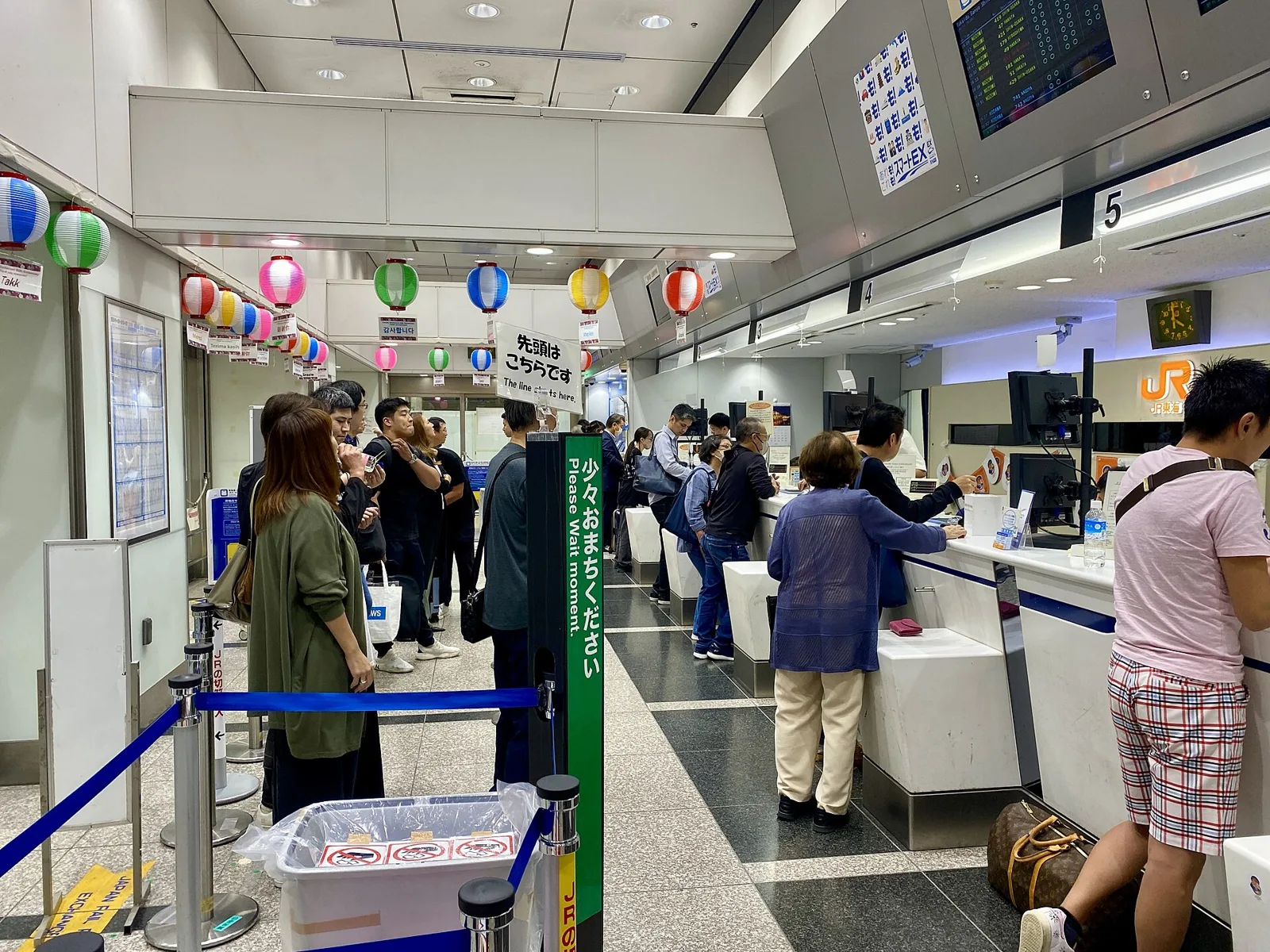
Travellers Exchanging Vouchers for Rail Passes (Photo: mrpbps, CC BY 2.0)
Riding NOZOMI and MIZUHO Trains
NOZOMI (Tokaido and Sanyo Shinkansen) and MIZUHO (Sanyo and Kyushu Shinkansen) are the fastest bullet trains, and they are still not included in the pass. To ride one, buy an [ONLY WITH JAPAN RAIL PASS] NOZOMI MIZUHO Ticket for each trip at a JR ticket office or reserved-seat ticket machine, from one month before travel. The price is the same for Green, reserved and non-reserved seats:
- Tokyo – Nagoya: ¥4,180
- Tokyo – Kyoto or Shin-Osaka: ¥4,960
- Tokyo – Hiroshima: ¥6,500
- Shin-Osaka – Hakata (Fukuoka): ¥4,960
- Hakata – Kagoshima-Chuo: ¥5,150
Honestly, HIKARI and SAKURA trains on the same lines are covered by the pass and are only a little slower, so most travellers skip the add-on. Prices from the official NOZOMI/MIZUHO page. During peak periods all NOZOMI seats are reserved (JR Central details).
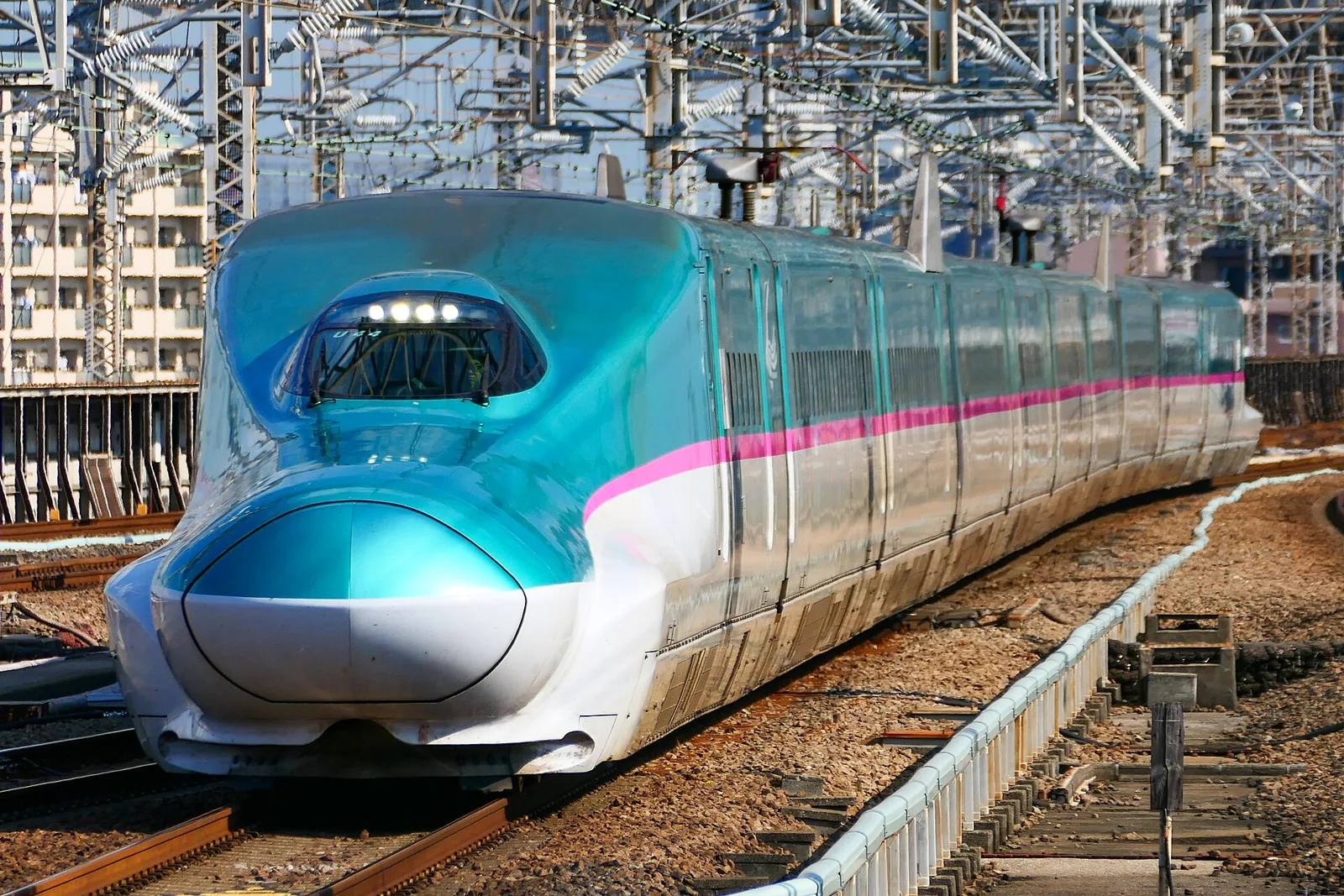
E5 Series Hayabusa, Covered by the JR Pass (Photo: MaedaAkihiko, CC BY-SA 4.0)
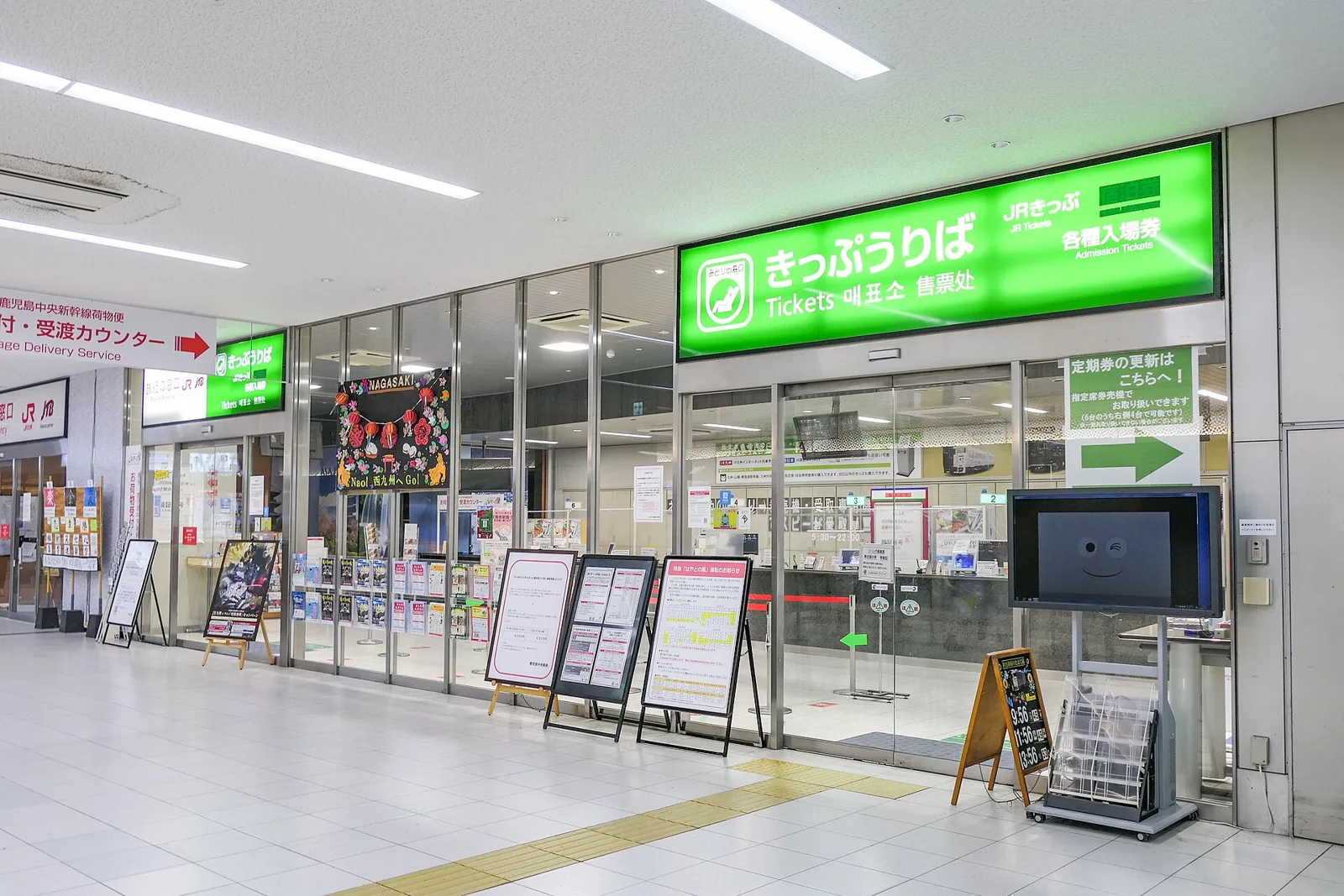
A JR Ticket Office (Midori-no-madoguchi) (Photo: MaedaAkihiko, CC BY-SA 4.0)
Reserving Seats and Travelling With Luggage
Seat reservations are free with the pass. Book them online if you bought on the official website, or at any reserved-seat ticket machine or “Midori-no-madoguchi” ticket office after you pick up your pass (how to book a reserved seat). Reserve early around Golden Week (early May), Obon (mid-August) and New Year (December 29 to January 3), when trains are packed.
Bringing a big suitcase? On the Tokaido, Sanyo, Kyushu and Nishi-Kyushu Shinkansen, bags with total dimensions of 160 to 250 cm need a seat with an oversized baggage area reserved in advance. Keep your passport on you while travelling, as staff may ask to see it.
Is the New JR Pass Worth It?
After the 2023 price rise, the pass only pays off if you travel long distances in a short time. A regular reserved NOZOMI seat from Tokyo to Shin-Osaka costs around ¥14,720 one way, so a simple Tokyo–Osaka round trip is well under the ¥50,000 price of a 7-day pass. The pass starts to make sense when you add longer legs, for example Tokyo to Kyoto, Osaka, Hiroshima and Fukuoka and back within a week, or a trip up north to Sendai and Hokkaido.
Our rule of thumb: add up the individual fares for your route before you buy. If they come to more than the pass price, buy the pass online. If not, single tickets, a regional pass or a night bus will save you money.
Cheaper Alternatives to the JR Pass
- Regional JR passes: If you are only exploring one area, a regional pass is usually much cheaper. See the official options from JR East, JR West, JR Hokkaido, JR Kyushu and JR Shikoku.
- Seishun 18 Kippu: Perfect for students on a budget, and open to residents too. It gives 3 (¥10,000) or 5 (¥12,050) consecutive days on JR local and rapid trains during school holidays. The winter 2026–27 ticket is valid from December 11 to January 11 (official page, in Japanese).
- Highway buses: Overnight buses are often the cheapest way between cities. Read our guide to travelling with Willer Express.
Quick Answers
Can I buy the JR Pass at a station in Japan? The official sales channels are the JAPAN RAIL PASS Reservation website and JR-designated overseas agencies. Buy online before or after you arrive, then pick it up at a station.
Can I get a refund? Only before the pass’s start date. Online purchases that have not been picked up can be refunded on the website for a ¥560 handling fee; agency Exchange Orders have their own fees (conditions for use).
Does the pass work on the Tokyo Metro? No. In Tokyo it covers JR lines like the Yamanote Line and the Tokyo Monorail, but not subways. Make sure you have mobile data to check routes on the go; see our guide to docomo services.
Final Thoughts
The new JR Pass is pricier than it used to be, but for a fast-paced trip that hops between big cities it is still a simple, stress-free way to see Japan. Buy it on the official website to get the lower price and free advance seat reservations, double-check that you qualify as a Temporary Visitor, and do a quick fare comparison first. Need ideas for where to go? Browse our places to see in Japan, our before you go checklist and the rest of our travel guides.
Ordinary (Standard) Pass, official website: 7 days ¥50,000, 14 days ¥80,000, 21 days ¥100,000 (children half price)
Green Car Pass, official website: 7 days ¥70,000, 14 days ¥110,000, 21 days ¥140,000 (children half price)
Overseas agency prices (from October 1, 2026): ¥53,000 / ¥84,000 / ¥105,000 (Ordinary) and ¥74,000 / ¥116,000 / ¥147,000 (Green). Full table HERE
Online (cheapest, with free advance seat booking): JAPAN RAIL PASS Reservation
Overseas JR-designated agencies: list of agencies
Pick-up and exchange offices in Japan: locations and hours
Buy an [ONLY WITH JAPAN RAIL PASS] NOZOMI MIZUHO Ticket for each ride, e.g. Tokyo – Shin-Osaka ¥4,960, Tokyo – Hiroshima ¥6,500. Same price for Green, reserved and non-reserved seats. Details HERE
Foreign visitors entering Japan with “Temporary Visitor” status (plus certain Japanese nationals living abroad). Not available to students or other residents living in Japan. Full rules HERE
Prices and rules are correct as of November 2026 and may change. Always check the official website before you buy.
Featured image: N700S Shinkansen passing Mount Fuji by Takeshi Aida, Wikimedia Commons, CC BY-SA 2.0. Other photos via Wikimedia Commons under the licences shown in their captions.
